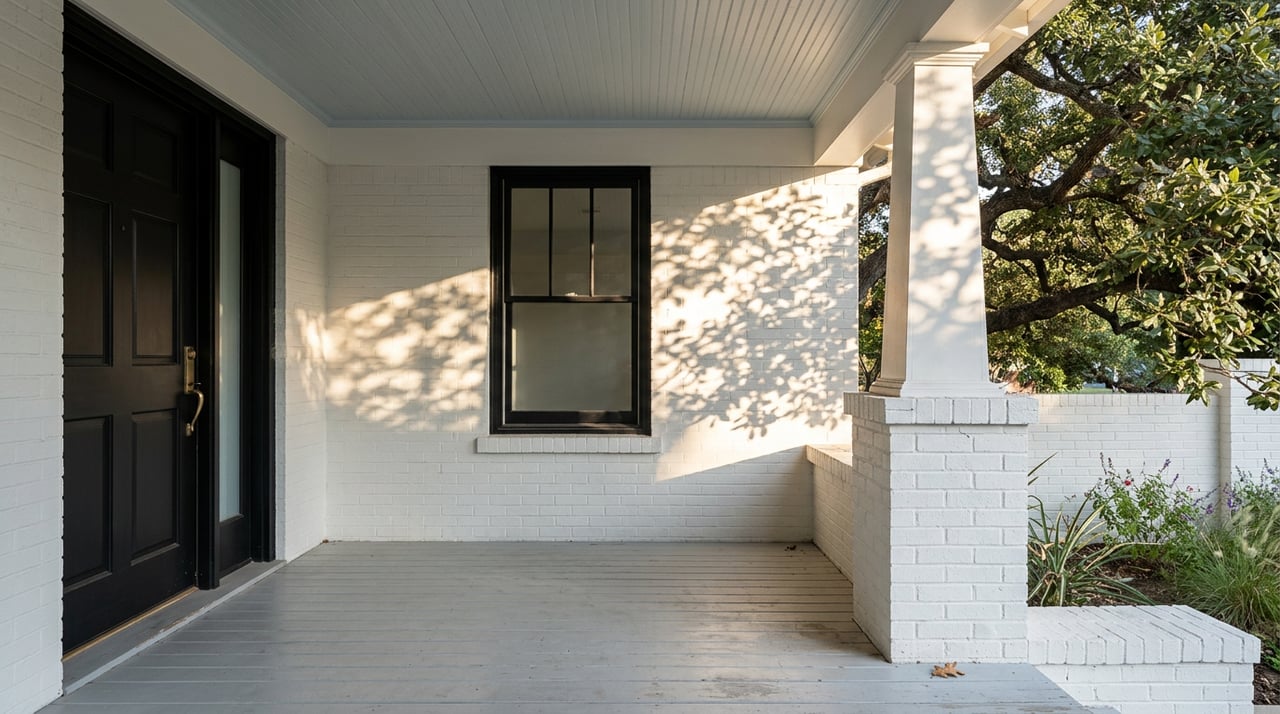
A seller in Zilker lists a 1968 bungalow on a standard lot near Barton Springs Road. Two offers come in within days, both close to asking. One buyer wants to move in and update the kitchen. The other wants to demolish and build three units under the city's newer density rules. The second buyer's contractor pulls a demolition permit application during the option period and discovers the house is old enough to trigger a historic preservation review under Austin's demolition permit rules. The closing timeline slips by weeks while the city sorts out whether the house needs a second look before it can come down.
That scenario illustrates a consideration for sellers of older homes in Zilker: the same house, on the same size lot, can be worth meaningfully different amounts depending on facts that have nothing to do with square footage or finish quality. Austin's zoning reforms changed the ceiling on what a lot can hold. They did not change it evenly, and the gap between what a lot could theoretically support and what a specific buyer can actually build is where a lot of Zilker deals are getting complicated this year.
The rule everyone already half-knows
Most people selling in Zilker have heard some version of the headline: Austin rewrote its single-family zoning rules to allow more housing per lot. The city's own Home Options for Mobility and Equity program, known as HOME, did exactly that in two phases. Phase 1 was adopted by City Council on December 7, 2023, with applications accepted starting February 5, 2024. Phase 2 followed on May 16, 2024, with applications accepted citywide by November 16, 2024, once the city worked through areas covered by the Wildland-Urban Interface and the Uprooted Report. A related Site Plan Lite and Infill Plat update was adopted in March 2025, and the city's HOME Amendments page shows the program's data still being tracked as of July 6, 2026, which tells you the rules are active, not a proposal sitting on a shelf.
Community Impact, reporting in May 2026 on a City Council resolution to revise parts of the program, summarized the core change plainly: HOME's two phases generally permitted up to three units of housing on most residential lots and cut the amount of land needed to build a house by more than two-thirds. That figure describes the general allowance, but a specific lot's redevelopment potential also depends on the restrictions and site conditions discussed below.
Why two lots that look identical don't price the same
The citywide entitlement is real, but it is not automatic on every parcel, and three factors help determine whether a given Zilker lot gets the full benefit of it.
The first is deed restrictions. The city's own Residential Plan Review guidance is direct about this: it is the applicant's responsibility to verify deed restrictions or restrictive covenants on a property, because some properties carry private restrictions that limit development regardless of what current zoning allows. A buyer's attorney or title company will find this during due diligence if the listing agent hasn't already surfaced it.
The second is the tree canopy. Zilker's older streets carry real oak cover, and the city's demolition permit rules require review for any protected tree, defined as 19 inches or more in trunk diameter, if work will impact its critical root zone or remove more than a quarter of its canopy. A heritage oak sitting where a third unit needs to go can quietly shrink the buildable envelope on paper HOME says should hold three units.
The third is the age of the structure itself, which is its own category of friction worth walking through on its own.
Lot with no deed restriction, no protected tree | Lot with a deed restriction or a protected tree in the build zone | |
|---|---|---|
HOME unit potential | Up to three units | Effectively capped at what the restriction or tree allows |
Most likely buyer | Small local developer or investor underwriting a rebuild | Owner-occupant planning to renovate or add a single ADU |
What a demolition permit triggers | Standard review, plus historic check if the house is 45+ years old | Same historic check, plus a tree or covenant review that can add weeks |
How it should price | Land value plus redevelopment upside | Improvement value, closer to a traditional renovation comp |
The 45-year review and its timing
The structure's age is another factor to account for when planning a demolition. Austin's demolition permit process requires that any residential structure 45 years or older be reviewed by the Historic Preservation Office, and potentially referred to the Historic Landmark Commission, before it can come down. The Zilker Neighborhood Association keeps its own running list of demolition filings in the neighborhood and flags this exact rule to residents.
Do the math on a neighborhood built out through the 1960s and 1970s. A large share of Zilker's housing stock is old enough to trip this review automatically. That does not mean a demolition gets denied; it means a redevelopment buyer may need to allow time for an additional review. Sellers can take that review into account when planning how to market the property and set expectations about timing.
Why the citywide number and the Zilker number aren't the same number
There's a broader pattern worth understanding, and it comes with a caveat: the data below is citywide, not Zilker-specific, but it shows the mechanism at work in exactly the kind of older, close-in neighborhood Zilker is. An analysis published by the Texas Public Policy Foundation found that in the twelve months before HOME-1 took effect in February 2024, roughly half of building permits in newly upzoned single-family areas went to vacant lots, while most of the rest replaced modest older homes one-for-one with larger, more expensive houses. In the twelve months after HOME-1 took effect, about 150 of those teardowns still resulted in larger replacement homes, but more than 100 teardowns produced over 260 smaller homes instead, spreading redevelopment value across more units rather than concentrating it in a single larger house.
That shift matters for how a Zilker seller should think about pricing. A buyer running the math on your lot isn't asking "what would a bigger house here sell for." They're asking whether the lot supports two or three smaller, separately sellable units, which changes the return calculation entirely, and that calculation only pencils out cleanly on lots without the restrictions covered above.
Zilker's zoning history and current policy discussion
Zilker has not been a passive bystander to Austin's zoning debates. The Zilker Neighborhood Association, established in 1981 with a stated mission of protecting the character of the neighborhood, formally objected during the city's 2017 CodeNEXT rewrite to a proposed transition zone the association said would incentivize the elimination of roughly 300 single-family homes in the area, and pushed the city to preserve an SF-3 equivalent designation instead.
That history is still relevant today. A council resolution from Council Member Krista Laine in May 2026 sought to simplify parts of HOME, including lot width and side yard requirements, and also led city staff to explore extending HOME allowances into Neighborhood Conservation Combining Districts, the overlay category created specifically to protect older parts of town. Community Impact reported that some of HOME's rules have already produced complex city reviews and even lawsuits, adding time and cost to new construction. ABoR's own deputy director of government affairs called the program's data encouraging, and Community Impact quoted Riley Patterson, a resident who owns an older small-lot home, saying that "today's $750,000 builds will be next generation's more affordable housing."
For sellers, the practical takeaway is that buyers considering redevelopment may weigh how current rules apply to a particular lot and whether those rules may change. That policy uncertainty can affect how buyers evaluate redevelopment potential, alongside the deed restrictions, trees and review requirements discussed above.
What this means before you set an asking price
If you're preparing to sell an older home in Zilker this year, a few things are worth confirming before the listing goes live rather than after an offer arrives:
- Pull the deed and check for restrictive covenants that predate HOME. A title company can confirm this quickly, and it changes which buyer pool you're marketing to.
- Get a rough read on any protected trees near the buildable area of the lot.
- Know your home's age relative to the 45-year threshold and be ready to talk through what that means for a demolition timeline, rather than letting a buyer discover it mid-contract.
- Look at your comps and ask whether they reflect renovation buyers, redevelopment buyers, or a mix, because a single "median price" for older Zilker homes right now is quietly averaging two very different valuation models together.
A few questions worth asking directly
Does HOME automatically make my lot a teardown candidate? Not automatically. The citywide entitlement allows up to three units on most residential lots, but a deed restriction or a protected tree in the wrong location can limit that in practice, regardless of what the base zoning permits.
Should I raise my home's age during listing prep? Since it triggers a public permitting review that any buyer planning to demolish will hit anyway, raising it during listing prep tends to keep a transaction moving instead of surprising a buyer's contractor during option period.
Does this apply the same way in Bouldin Creek or other parts of 78704? The citywide HOME rules apply broadly, but deed restriction history and neighborhood advocacy vary block by block. Bouldin Creek has its own neighborhood association, founded in 1980, and its own track record on development questions, so the same checklist applies even if the specifics differ from Zilker's.
Pricing an older home well right now means understanding which buyer is actually going to show up for it, and that depends on details a standard comp sheet won't surface. If you're weighing whether to prep your Zilker home for a renovation buyer or a redevelopment buyer, or you want a second read on what your specific lot supports before you set a number, Scott Pate can walk through it with you. Schedule a private consultation and bring the questions above with you.
This article is general information, not legal, tax or financial advice. Consult a qualified professional about your situation.